
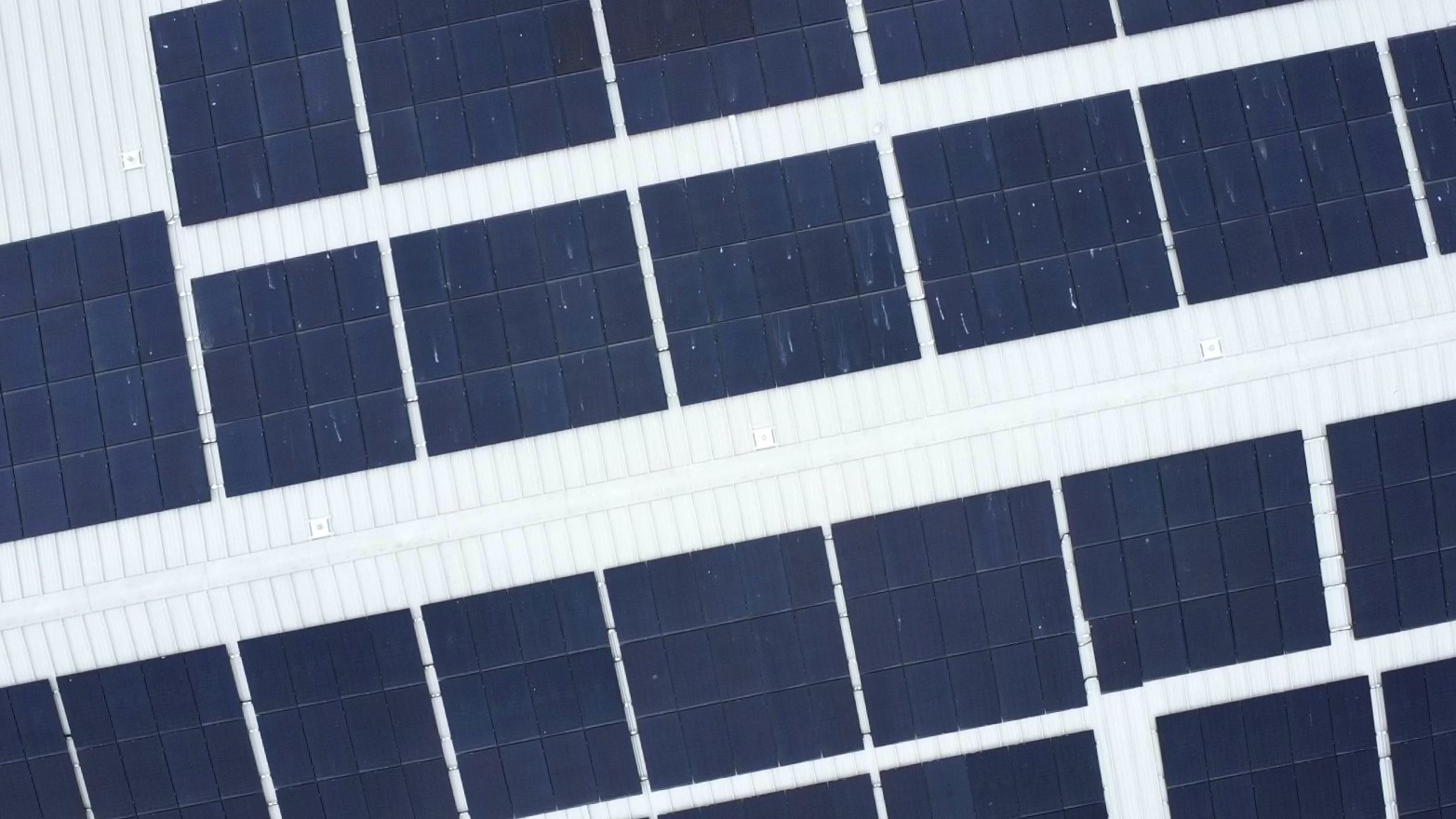
Logistics companies are reassessing warehouse roofs as energy assets as electricity prices remain a major operating concern. On-site solar can reduce reliance on volatile wholesale markets, but the strongest business case increasingly involves batteries and automated energy management rather than panels alone.
UK logistics and industrial buildings of at least 50,000 square feet are estimated to contain about 1.5 billion square feet of roof space, with potential annual generation above 36GWh. That capacity could support the government’s ambition of 45–47GW of solar power by 2030.
The main obstacle is often the local grid connection. A warehouse may be able to generate more solar electricity than it can consume, while the network may lack capacity for the surplus. Storage allows excess power to remain on site, and controls can keep exports within the approved limit. This can make a grid constraint an engineering issue instead of a reason to abandon the project.
At pharmaceutical distributor Mawdsleys’ Doncaster warehouse, expected consumption supported a 1,700kW rooftop system, but the permitted connection limit was lower. A battery and export controls enabled the larger installation to operate within the restriction.
Big Yellow Self Storage has used a related model at its Slough site, combining rooftop solar with a battery capable of powering the facility for up to ten hours. The project helped establish requirements for future locations.
Operators should assess half-hourly demand, roof condition, expected load growth and connection limits before deciding how many panels to install. Wattstor is among the providers developing integrated solar-storage solutions. For new warehouses, these systems are best planned together from the design stage.

A multilingual professional experienced in Europe, Canada, and China, Herbert has developed invaluable networks in the automotive and energy industries. He has led high-profile projects involving ENBW, Mercedes-Benz Group, Siemens Group, and the Fraunhofer Institute.