
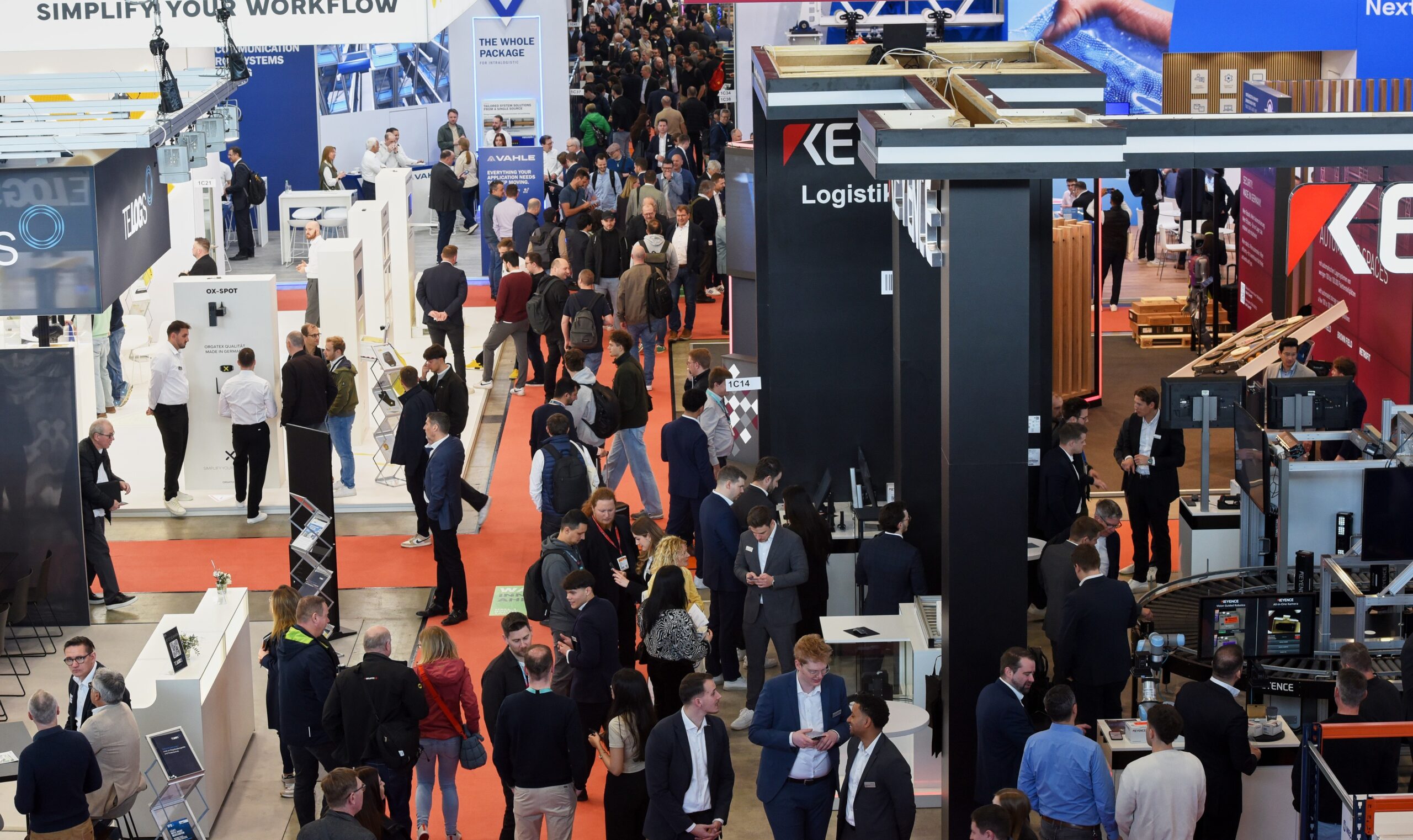
LogiMAT’s 25 years in Stuttgart mark the transformation of intralogistics from a specialist regional market into a global industrial sector. The exhibition began in 2003 at Killesberg with 160 exhibitors and about 3,700 visitors.
Early editions featured picking technologies, RFID, cloud software, robots and automated guided vehicles. As e-commerce expanded, the show increasingly focused on digital logistics, material-flow automation and integrated systems. Energy efficiency, sustainable warehouse construction and environmentally focused industrial trucks became prominent themes from around 2010.
The event moved to Messe Stuttgart in 2008, initially using three halls and attracting more than 571 exhibitors and 15,000 visitors. By 2019, it occupied all ten halls. Although the pandemic prevented a physical event in 2020, LogiMAT returned to the full venue in 2022.
Recent editions have concentrated on autonomous robots, drones, smart sensors, artificial intelligence, scalable automated warehouses and cloud platforms for warehouse management and analytics. Cybersecurity and supply-chain resilience have also gained importance as companies assess automation investments against operational risk.
The 2026 edition set a new benchmark, with 1,671 exhibitors and 69,856 professionals attending. Exhibitors represented 46 countries, underlining the event’s international reach. For industrial businesses, the anniversary highlights a market shift: automation is no longer judged solely by speed or labour savings, but by how effectively it integrates data, energy performance, flexibility and resilience. LogiMAT continues to provide a Stuttgart-based forum for those decisions.

A multilingual professional experienced in Europe, Canada, and China, Herbert has developed invaluable networks in the automotive and energy industries. He has led high-profile projects involving ENBW, Mercedes-Benz Group, Siemens Group, and the Fraunhofer Institute.