
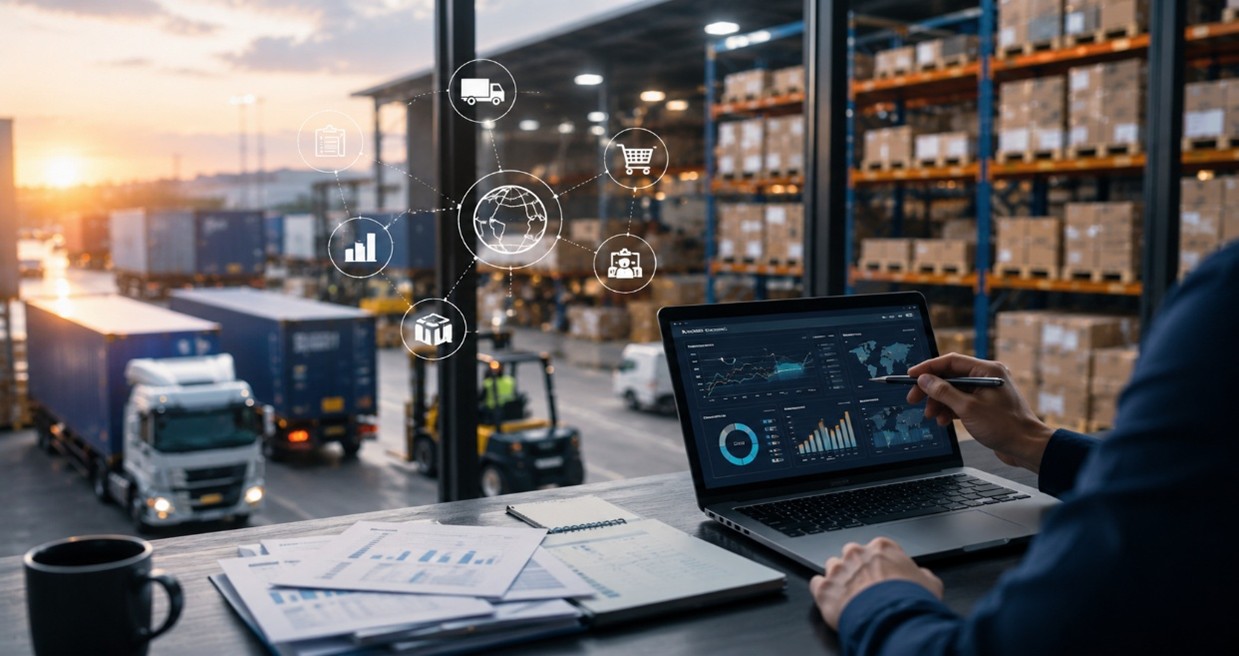
Supply chain visibility is becoming a baseline capability. The commercial question now is how quickly businesses can turn data into decisions and coordinated action.
AI is supporting that transition by analysing signals across transport, inventory, planning and execution. It can identify patterns, highlight potential disruption and help teams respond before delays or shortages spread. This creates a sense-and-respond model rather than a system focused mainly on explaining past performance.

For industrial companies, the technology needs to sit inside everyday workflows. Transport, warehouse, planning and compliance teams should receive decision support where work is already being performed. Reliable data, consistent processes, governance and clear accountability remain essential to scaling these applications.
AI does not remove the need for professional judgement. People must still resolve trade-offs involving safety, customers, ethics and responsibility. The strongest operating model combines automated analysis with human control.
Business impact is the meaningful benchmark: more predictable deliveries, lower variability, improved resource use and greater resilience. Digital twins, advanced analytics and computer vision are helping extend logistics from passive visibility toward active orchestration. Schneider Electric is developing control-tower thinking around this connected approach.

A multilingual professional experienced in Europe, Canada, and China, Herbert has developed invaluable networks in the automotive and energy industries. He has led high-profile projects involving ENBW, Mercedes-Benz Group, Siemens Group, and the Fraunhofer Institute.