
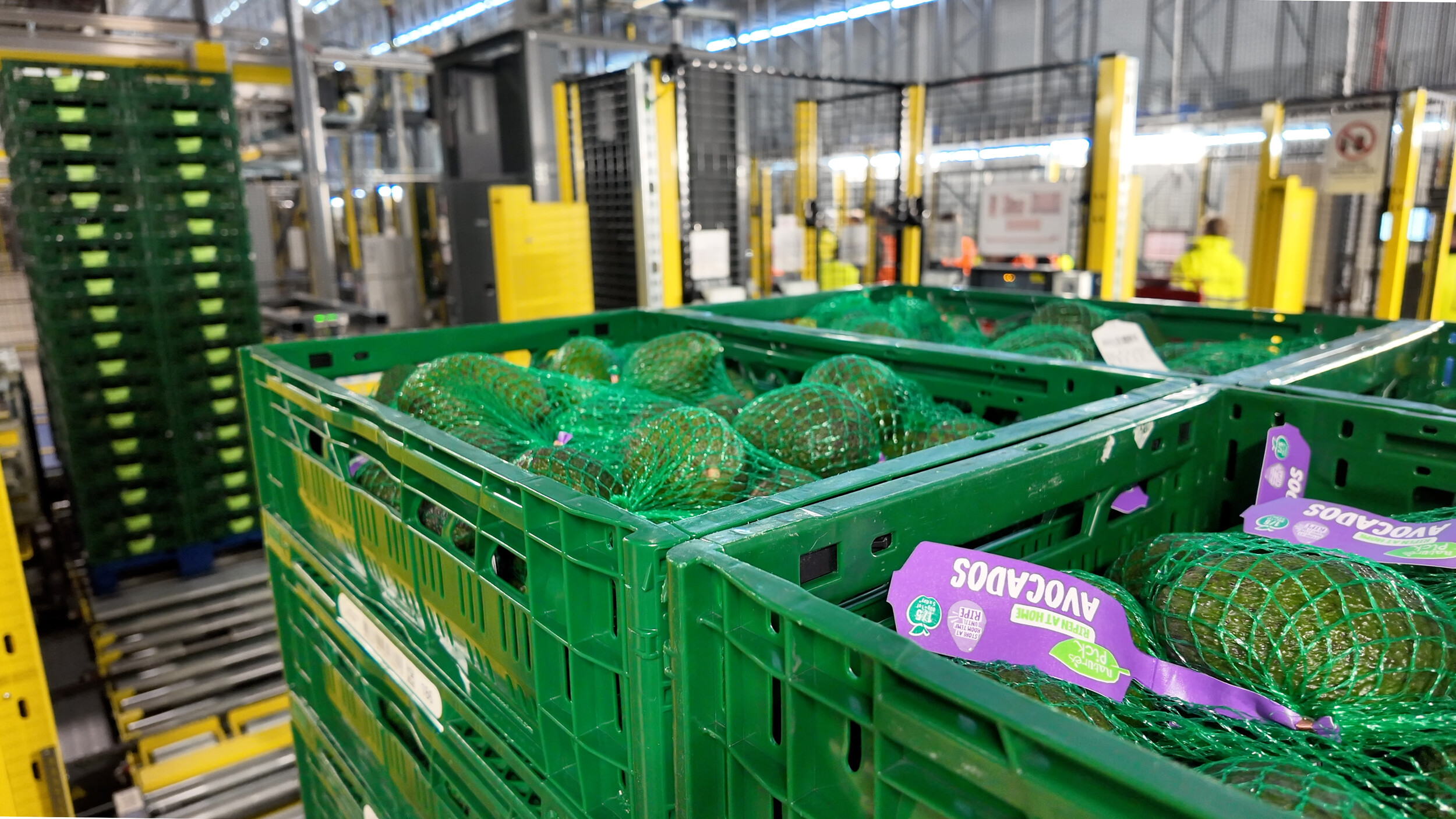
Aldi has started fresh-produce operations at its Bardon Distribution Centre in Leicestershire, marking the next step in the development of its automated logistics network. The first pallets, including ginger and avocados, arrived on 16 September, with the first outbound pallet dispatched the following day.
The site began operating in May 2026 after an investment of more than £500 million. Bardon forms part of Aldi’s wider £1.6 billion UK investment programme for 2026 and 2027. Its roof carries 19,000 solar panels, and Aldi describes it as the lowest-carbon-density warehouse in the Aldi South Group.
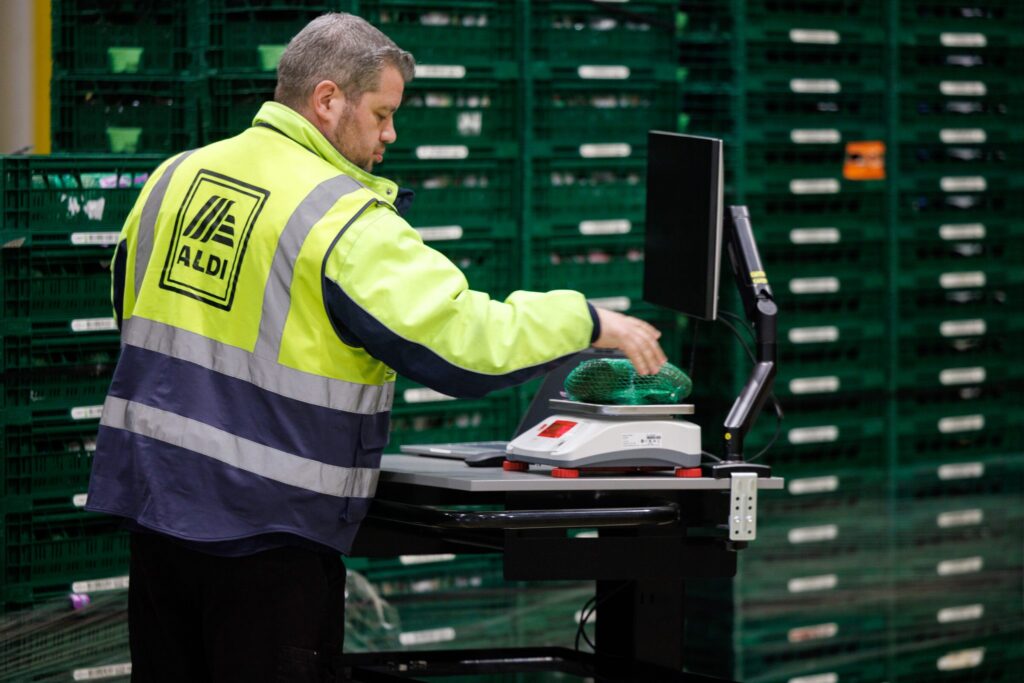
Fresh products are handled in three temperature-controlled areas, including chilled storage for apples and carrots and a dedicated banana room. High-bay racking stores pallets until required, while automated shuttles retrieve them for dispatch. The system was supplied by Cimcorp.
When fully operational in 2027, the 1.3 million-square-foot centre is expected to process more than 1.5 million kilograms of fruit and vegetables a day during peak periods. More than 6,000 pallets could leave the facility daily for Aldi stores across the UK, with annual site capacity approaching seven million pallets.
The project supports Aldi’s ambition to operate 1,500 UK stores. The retailer sells about 2.2 billion fruit and vegetable items annually and aims to increase portions sold by 14% by the end of 2027. Bardon is expected to employ around 1,000 people once fully operational, adding capacity while helping Aldi manage freshness, cost and demand at national scale.

A multilingual professional experienced in Europe, Canada, and China, Herbert has developed invaluable networks in the automotive and energy industries. He has led high-profile projects involving ENBW, Mercedes-Benz Group, Siemens Group, and the Fraunhofer Institute.