
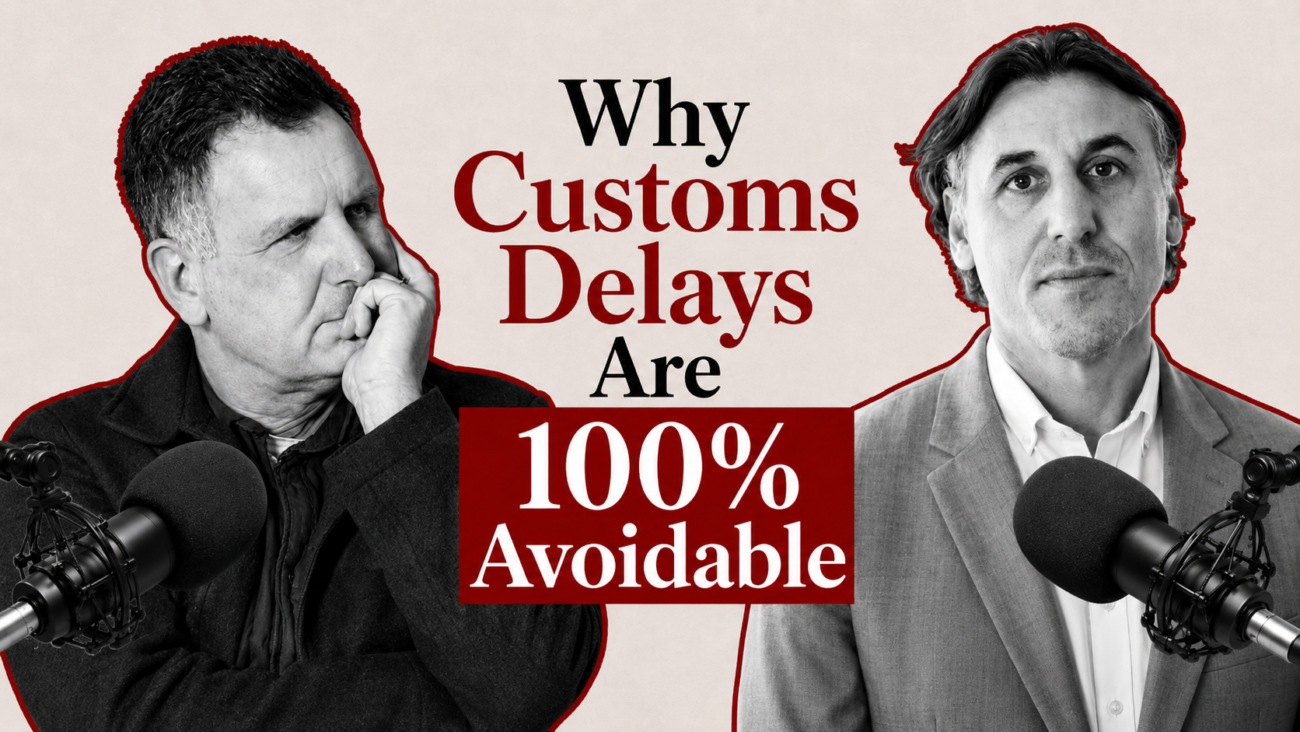
Customs disruption is often blamed on border complexity, but a significant share of the risk can be addressed before goods are shipped. Patrick Frith of Avalara says companies should focus on the accuracy of the information behind each declaration.
HS classification, country of origin and declared value are among the details that can determine whether a shipment clears smoothly. An incorrect classification may lead to the wrong duty being charged, while an overlooked tariff can create an unexpected cost. Errors may also prompt further compliance checks.
The commercial impact can extend beyond customs. A delayed shipment may leave industrial inventory unavailable, disrupt production schedules or increase transport and administrative costs. As governments demand more detailed information and trade routes change, these risks are becoming harder to manage through manual processes alone.
Technology moves risk management upstream
Automation and AI are being considered for product classification, data validation and monitoring of regulatory changes. The scale of global updates—covering tariffs and other trade requirements—makes continuous manual tracking increasingly difficult.
Technology cannot replace expert judgement in complex cases, but it can identify inconsistencies earlier and support more consistent preparation of declarations. For companies with international supply chains, the objective is straightforward: resolve preventable errors before a shipment reaches the border.

A multilingual professional experienced in Europe, Canada, and China, Herbert has developed invaluable networks in the automotive and energy industries. He has led high-profile projects involving ENBW, Mercedes-Benz Group, Siemens Group, and the Fraunhofer Institute.