
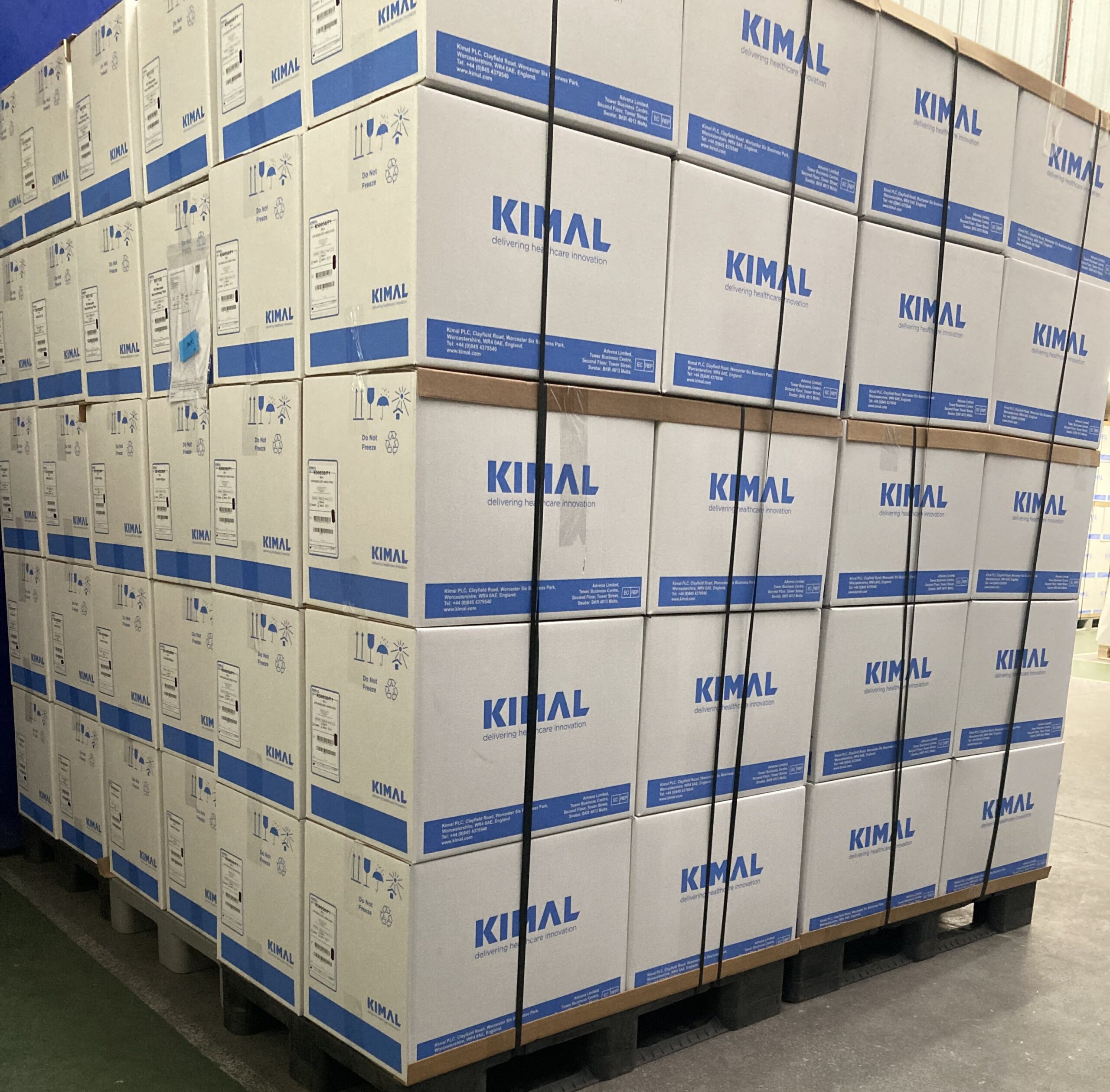
Kimal has changed the way it moves medical products between production, sterilisation and distribution after losses of wooden pallets pushed annual spending to about £80,000.
The company had been buying approximately 250 wooden Euro pallets each week for shipments from its Bromsgrove clean-room facility to an external sterilisation provider. Most pallets did not return, while breakages and splinters created safety concerns and a potential risk to automated equipment.

Kimal introduced 1,095 heavy-duty pallets made from 100% recycled HDPE. The pallets have an open deck to allow sterilising gas to pass through and are used only within an internal loop. They travel to sterilisation and then to the company’s Worcester distribution hub, where they are recovered. Lower-cost wooden pallets are used for outbound customer deliveries.
The arrangement generated approximately £20,000 in savings during its first year after implementation and equipment costs. Future annual savings are forecast at around £84,000, including maintenance and replacement allowances. Pallet deliveries have also been consolidated from weekly shipments into one annual delivery, producing a projected CO₂ reduction of 1,200kg a year.
At roughly 16kg, each plastic pallet is 10–14kg lighter than the wooden alternative, reducing the physical demands of manual handling. The case highlights the commercial value of retaining reusable transport assets within a defined supply-chain loop.
The system was supplied by Go Plastic Pallets.

A multilingual professional experienced in Europe, Canada, and China, Herbert has developed invaluable networks in the automotive and energy industries. He has led high-profile projects involving ENBW, Mercedes-Benz Group, Siemens Group, and the Fraunhofer Institute.