
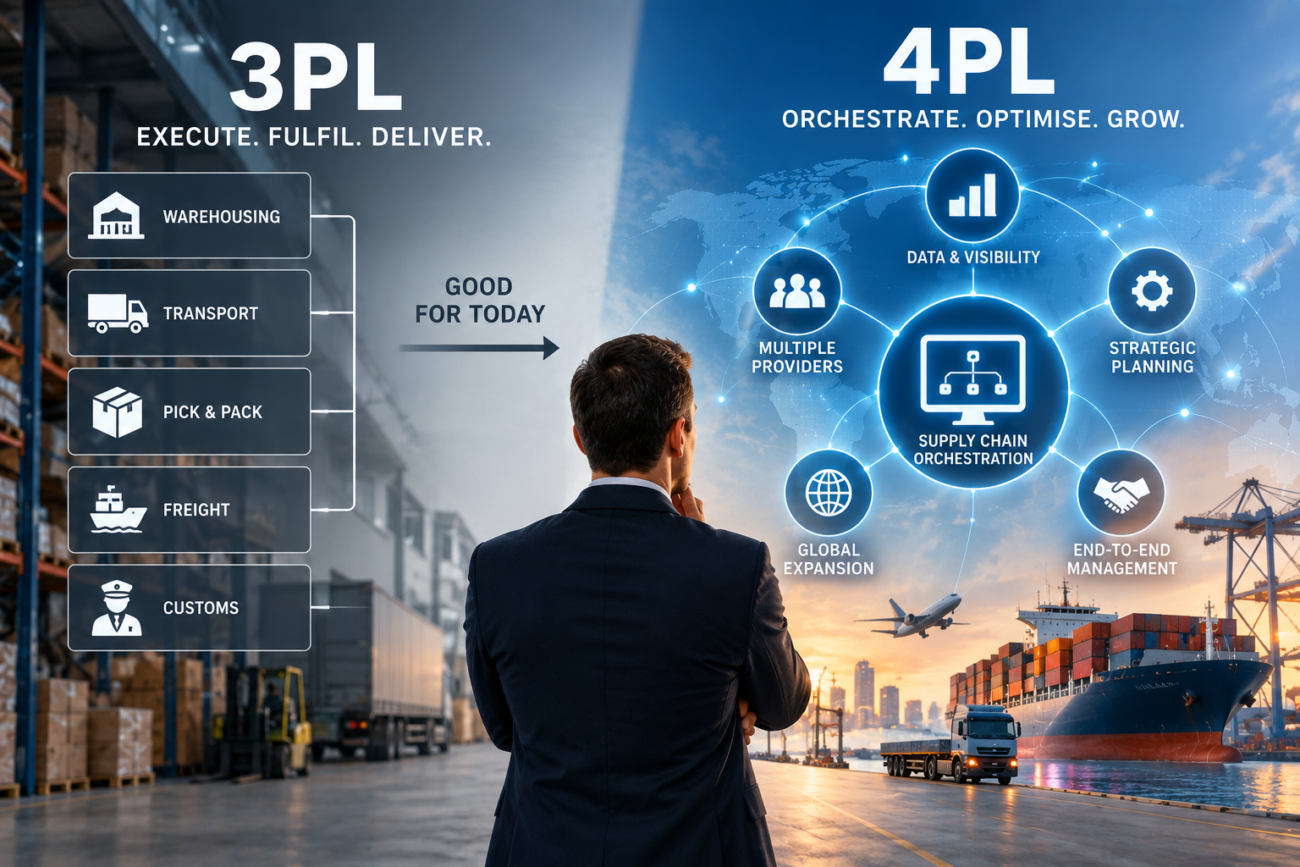
A third-party logistics provider can remain effective while the wider 3PL model becomes difficult to manage. Expansion across markets often brings additional carriers, regional partners and incompatible reporting systems, reducing visibility across the supply chain.
Paul Lockwood of SEKO Logistics identifies four indicators: the provider lacks the network needed for the next phase of growth; logistics is becoming a strategic business function; information is split between multiple WMS, TMS and EDI environments; and managing several providers is creating more work than value.
Technology is a particular concern. The 2026 30th Annual Third-Party Logistics Study says 90% of shippers view technology capability as critical when selecting a 3PL, while only 57% are satisfied with their provider’s technology. Fragmented data can affect inventory control, order visibility and performance reporting.
Network consolidation is already a priority: the study found that 50% of shippers and 62% of 3PLs report active efforts to reduce the number of logistics partners. For companies managing four or five relationships across different markets, appointing another operator may not simplify operations.
This is where a fourth-party logistics, or 4PL, model may be considered. A 4PL coordinates several logistics providers and can provide an orchestration layer across their processes and systems. It may also support more strategic decisions around inventory, landed cost, resilience and market entry.
However, 4PL is not an automatic next step. The model can involve a demanding transition, a different cost base and greater transfer of control. Businesses concentrated in one or two markets may be better served by strengthening their existing 3PL relationship. The key test is whether the structure of the network, rather than the performance of one provider, has become the constraint.

A multilingual professional experienced in Europe, Canada, and China, Herbert has developed invaluable networks in the automotive and energy industries. He has led high-profile projects involving ENBW, Mercedes-Benz Group, Siemens Group, and the Fraunhofer Institute.