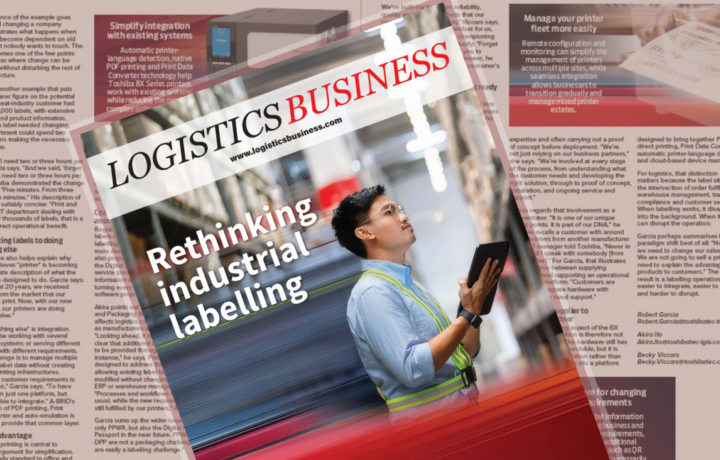


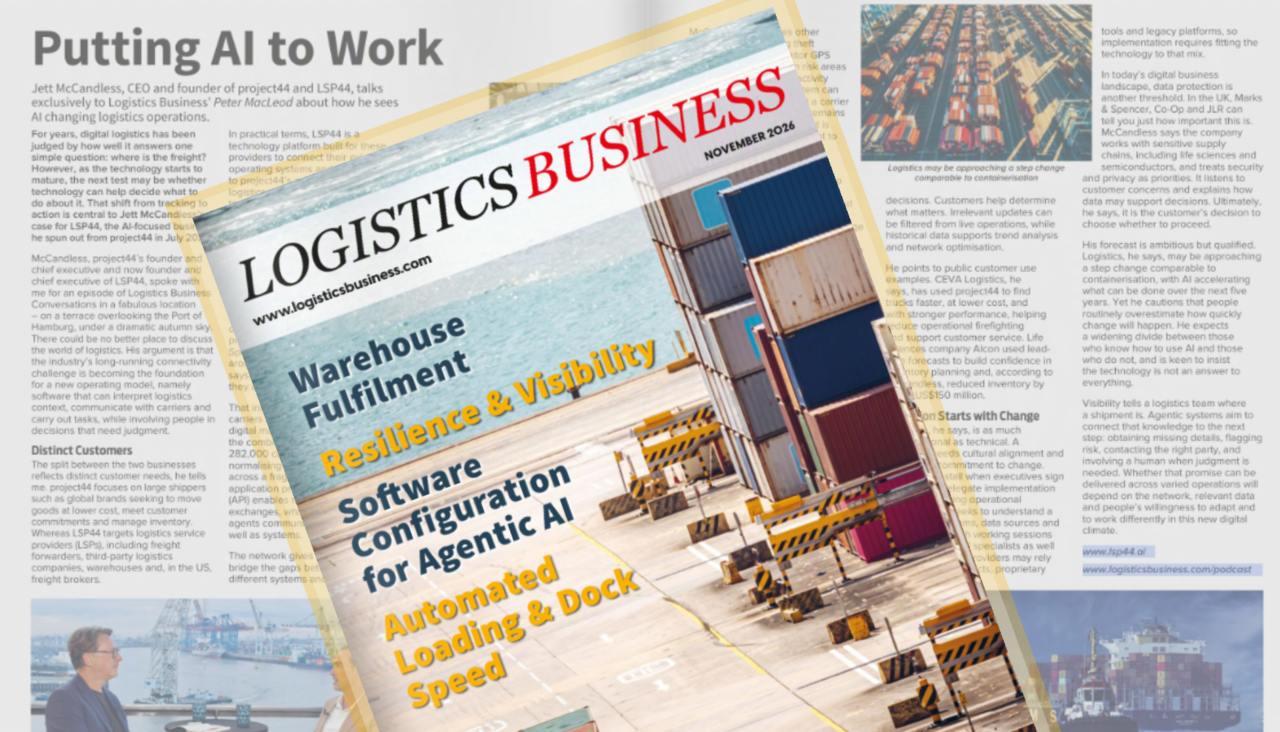
The November 2026 issue of Logistics Business Magazine focuses on the technologies and operating strategies shaping logistics investment. Its coverage spans artificial intelligence, warehouse robotics, automated loading and supply-chain resilience.
Jett McCandless, founder of project44 and LSP44, discusses the industry’s progression from shipment visibility to AI-supported decision-making. The feature asks whether this transition could become a structural change comparable with containerisation.
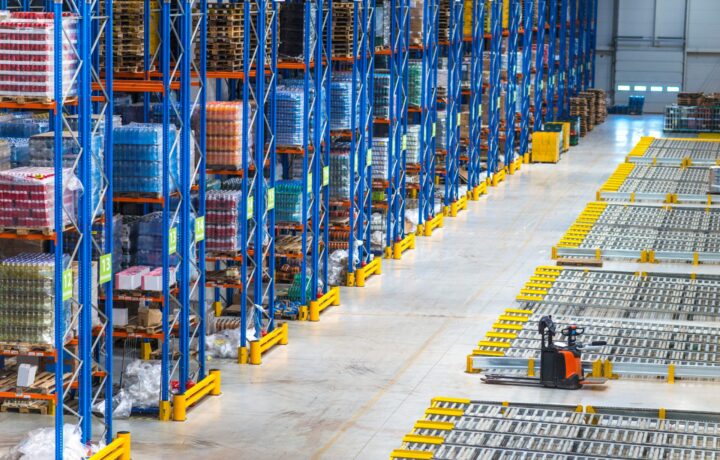
Major warehouse projects provide a practical view of the trend. TGW Logistics outlines its £340 million automation programme for Marks & Spencer’s new grocery fulfilment centre in Daventry. The design challenge includes preparing for future requirements that may be difficult to forecast.
A separate report examines Footasylum’s operation with THG Fulfil, where 85 robots and 96,000 storage locations form part of the automated solution. The article also considers the investment and reported productivity improvements behind the project.
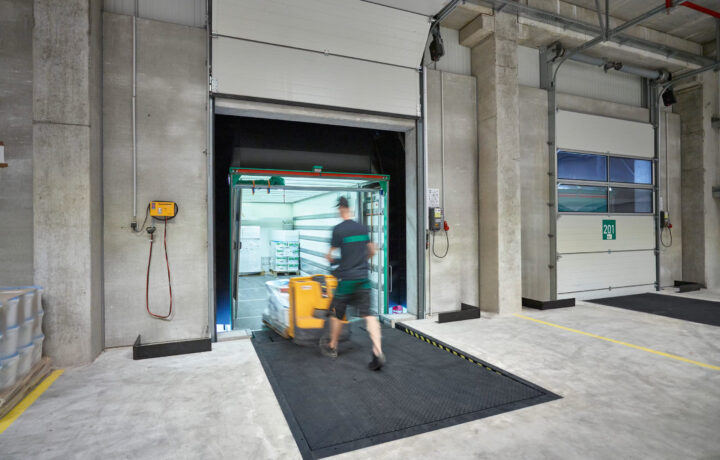
Joloda Hydraroll addresses trailer loading, presenting technology intended to load non-modified trailers in under 10 minutes. Faster loading could help reduce delays around warehouse despatch without requiring dedicated trailer modifications.
The issue also considers resilience as a strategic priority. Daniel Carrera, president of UPS Europe, Middle East and Africa, discusses the balance between efficiency and the ability to absorb disruption. Blue Yonder examines how improved freight-emissions data may influence transport choices.
Other coverage includes autonomous mobile robots, warehouse safety, software integration, sustainable packaging and materials-handling innovation, giving operators a broad view of the technologies competing for attention across the logistics market.