

Humanoid robotics is attracting major interest across industry, but warehouse deployment remains an open question. Fulfilment operators need systems that can cope with sudden order peaks, complex baskets and large SKU ranges—not simply machines that reproduce human movements.
Human labour remains highly flexible, while conveyors and sorters provide predictable performance at a largely fixed capacity. Humanoid robots sit between those models, but their cost and limited warehouse track record make broad labour replacement unrealistic for now.
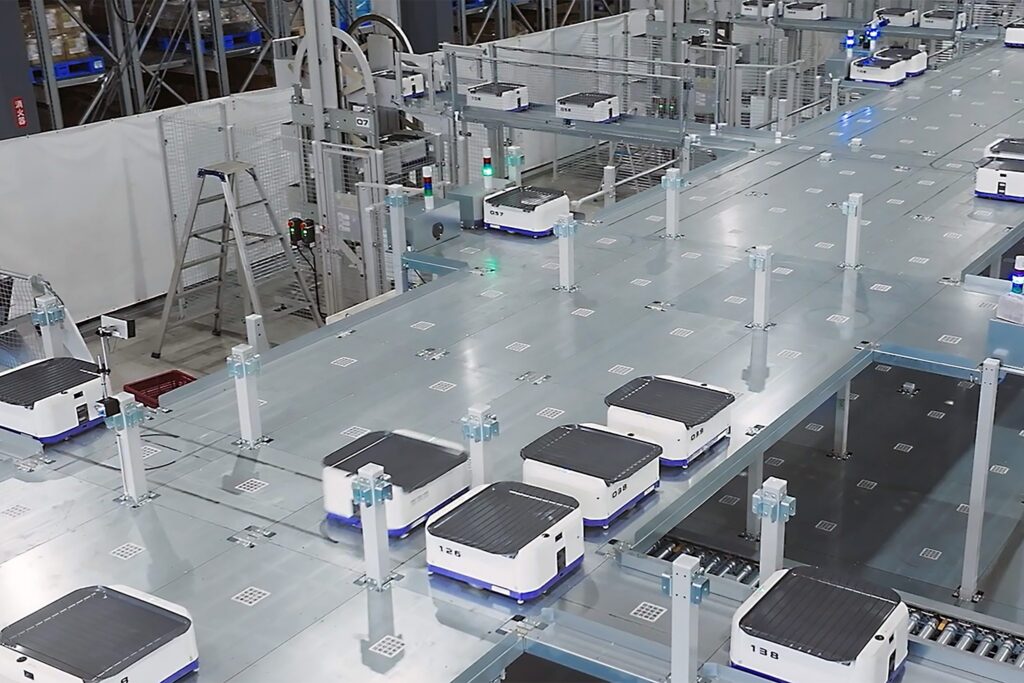
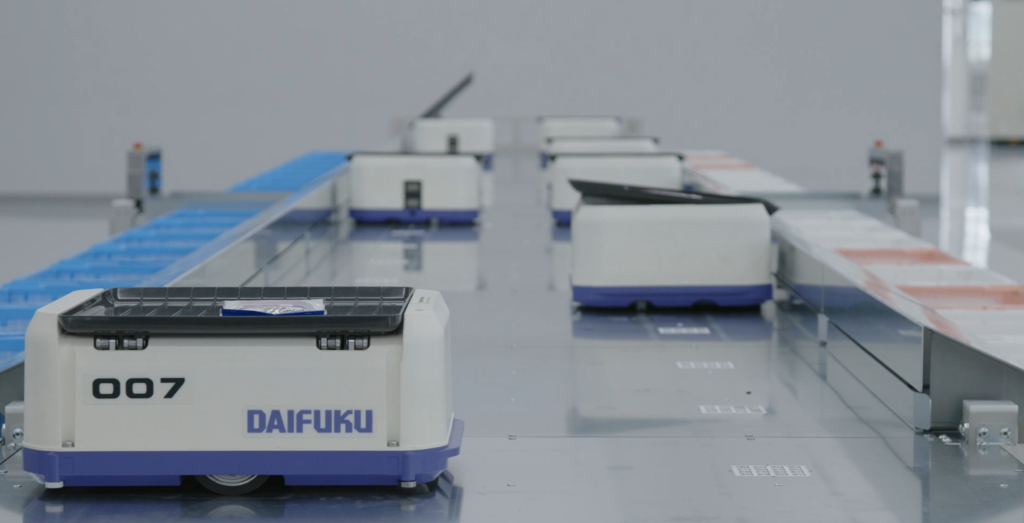
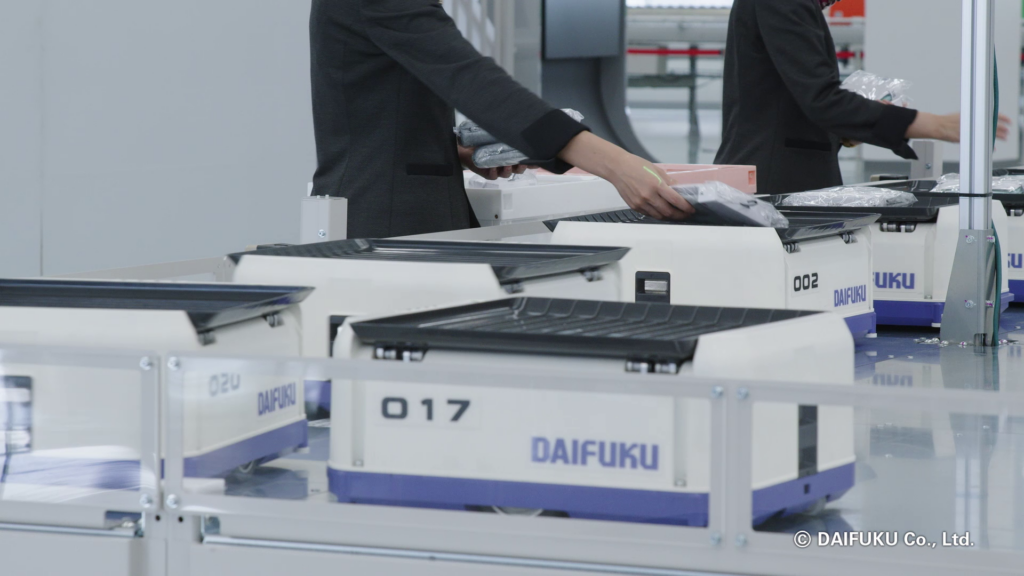
A more immediate option is demand-driven mobile automation. Daifuku’s SOTR-S uses independently operating robots to move picked items between process points. Operators place products on stopped vehicles, while a warehouse control system and robot traffic controller assign destinations and routes.
The fleet can respond to the workload in real time. Only the required units need to operate, and some can be taken offline during extended low-volume periods. This links energy use and equipment activity more closely to actual throughput than a permanently sized conveyor system.
The distributed design also limits the effect of failures. A stopped robot affects its own load, while other vehicles continue operating. Individual units can be removed for maintenance without taking down the full process.

Humanoids are likely to find specialist applications as the technology matures. For most industrial operators, however, the near-term priority is resilient, scalable automation that delivers measurable performance rather than novelty.

A multilingual professional experienced in Europe, Canada, and China, Herbert has developed invaluable networks in the automotive and energy industries. He has led high-profile projects involving ENBW, Mercedes-Benz Group, Siemens Group, and the Fraunhofer Institute.