

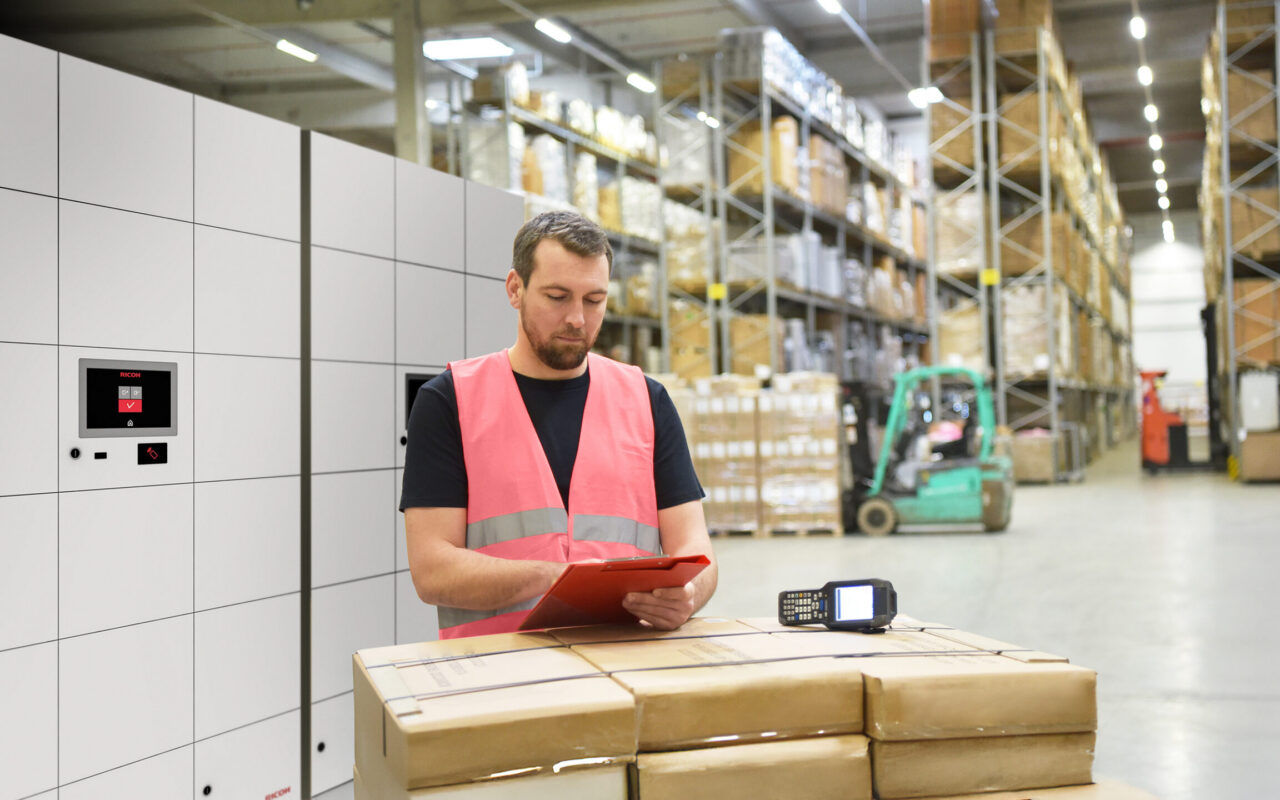
Warehouse scanner shortages can be misleading. Devices may be physically present but unavailable because employees keep trusted units in personal lockers for their next shift.
The practice creates a gap between asset records and operational reality. Standard systems often show a scanner as either in circulation or lost, leaving privately stored equipment unaccounted for. Businesses may therefore replace devices that remain on site, while colleagues spend time searching for working alternatives.

One retailer had been setting aside a six-figure annual sum for missing handhelds. After revising how equipment was issued and returned, it no longer needed replacement purchases. The same operational principle applies to low-cost tools: IKEA found that missing tape measures and safety knives at packing stations could delay work because employees could not begin immediately.
From storage to controlled circulation
Smart lockers can assign the least-used device first, spreading wear across a fleet and reducing the emergence of personal favourites. They can also allow a worker to record a fault during return. Managers then gain earlier visibility of equipment requiring attention, and the next user is less likely to collect a defective scanner unknowingly.
Placement matters as well. Next has distributed lockers around its distribution centre, shortening collection and return journeys. That saves time at shift start and removes some of the incentive to retain equipment away from the shared system.
The business case therefore extends beyond the locker hardware. Automated allocation, fault reporting and traceability determine whether a site recovers availability and controls replacement costs. Ricoh UK outlines the relevant approach through its smart locker services.