

Industrial companies are increasingly treating warehouse automation as an integration challenge rather than a series of equipment purchases. Storage systems, robotics, controls and software must now connect with production and business systems from the outset.
The shift is encouraging manufacturers to appoint a single partner for engineering, construction, automated equipment and warehouse software. The aim is to reduce coordination risk and make the complete operation—not an individual machine—the basis for performance decisions.
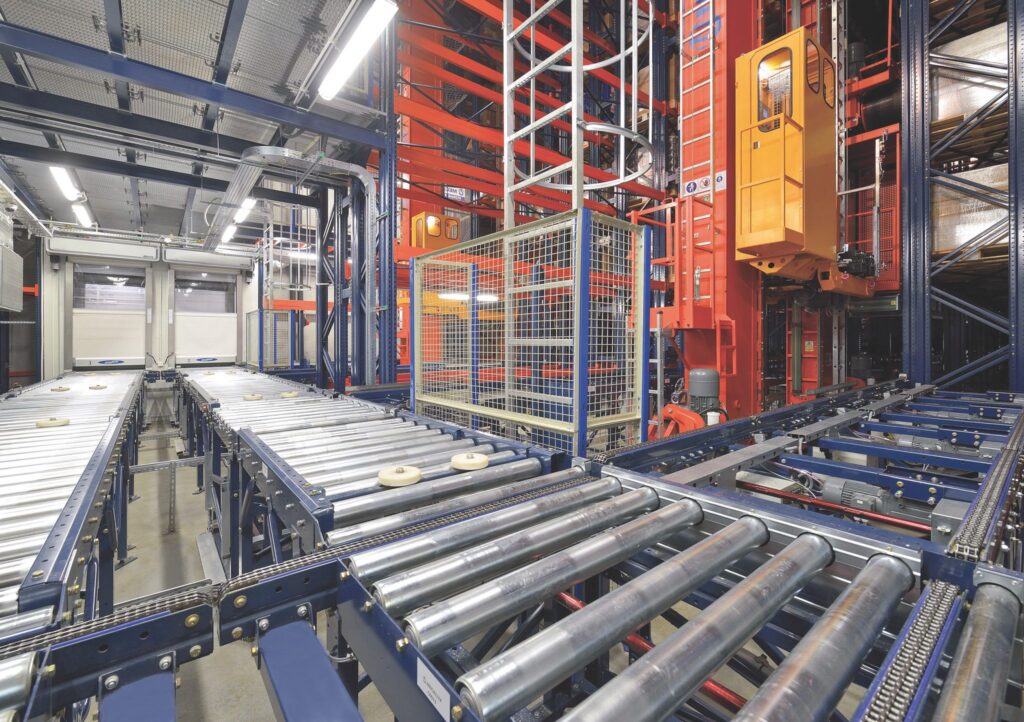
Mecalux delivers projects under this model, combining storage, automation, robotics and its Easy WMS, Easy WCS and Easy WES software portfolio. The systems are designed to coordinate warehouse activity, automated equipment and operational workflows.
At Cepsa’s lubricants facility in southern Spain, a turnkey project connected an automated warehouse with production and included engineering, construction and warehouse-management software. Takeda’s expanded pharmaceutical facility in Poland brought together automated storage, climate control, fire protection and software, supporting traceability and controlled operating conditions.
Other cases show the range of industrial applications. British Sugar required a reliable flow of finished products between processing and storage. Lantmännen Unibake needed a centre for chilled and frozen goods with continuous flow and full traceability. Its installation dispatches close to 100 pallets per hour while allowing for future expansion.

The commercial implication is significant: automation is increasingly judged by operational continuity, data synchronisation and long-term adaptability. Companies including PepsiCo, Unilever, IKEA, HAVI Logistics, Coca-Cola and Thule have selected Mecalux for logistics operations in different sectors. Further information is available from Mecalux.

A multilingual professional experienced in Europe, Canada, and China, Herbert has developed invaluable networks in the automotive and energy industries. He has led high-profile projects involving ENBW, Mercedes-Benz Group, Siemens Group, and the Fraunhofer Institute.